Leavenworth Foundation Risk: Loess-over-Limestone, Pawnee Clay, and the Oldest Housing Stock in Kansas
Leavenworth combines two foundation risk factors that no other Kansas City metro suburb shares: a loess-over-limestone soil profile that concentrates moisture damage in a thin zone against walls, and a housing stock that dates to 1854 — giving those soils more time to work against foundations than anywhere else in the region.
Leavenworth's loess-over-limestone soil profile creates a distinct foundation threat: the thin loess layer saturates rapidly and can collapse under foundation loads when wet, while the Pawnee clay subsoil beneath it expands and contracts seasonally. As Kansas's oldest city (founded 1854), Leavenworth's historic housing stock has endured over 160 years of these compound soil forces — far longer than any other KC metro suburb.
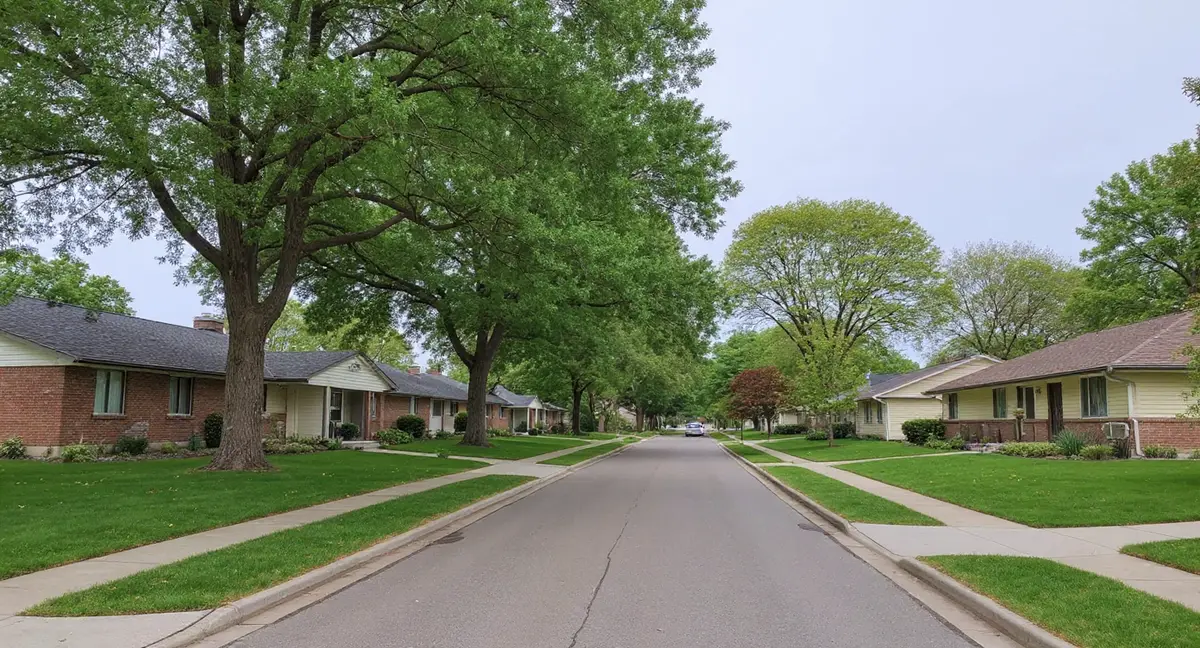
Why Does Leavenworth's Loess-over-Limestone Create a Distinct Foundation Threat?
Leavenworth sits on the Pawnee soil series — a formation derived from glacial till with a clay loam surface layer and heavy clay subsoil — but the defining characteristic of the Leavenworth County soil profile is the loess layer that sits over limestone bedrock. Loess is wind-deposited silt that accumulated during glacial periods. Unlike the deep Wymore-Ladoga clay that extends many feet below grade in Johnson County, the loess-over-limestone foundation substrate in Leavenworth creates a comparatively thin soil layer between the surface and bedrock. The foundation science page explains how soil depth determines the magnitude and distribution of seasonal foundation movement.
The shallow loess moisture concentration effect is the key risk mechanism: all seasonal moisture changes are compressed into a thin zone that sits directly against foundation walls and beneath footings. In a deep-clay environment like Johnson County, rainfall distributes through several feet of soil, diluting the moisture change at any given depth. In Leavenworth's loess-over-limestone profile, the limestone below acts as an impermeable barrier that prevents downward drainage, trapping moisture in the loess layer. During spring rains, this thin layer saturates completely and rapidly.
Saturated loess behaves differently from saturated clay — loess loses bearing capacity when wet because silt particles lack the cohesive bonding that clay minerals provide. A saturated Wymore-Ladoga clay expands and pushes against walls, which is damaging but predictable. Saturated loess can collapse under foundation loads, producing sudden settlement rather than gradual expansion-driven movement. Homes on Leavenworth's loess-over-limestone profile may experience settlement events after heavy rainfall — the footing sinks as the loess beneath it weakens — rather than the lateral wall pressure that dominates in Johnson County.
The Pawnee soil series adds a clay component to the picture: the subsoil beneath the loess surface contains heavy clay that does expand and contract with moisture changes. This means Leavenworth foundations face a compound threat. The upper loess layer loses strength when wet and shrinks when dry. The deeper clay subsoil expands when wet and contracts when dry. Foundations caught between these two behaviors experience both settlement and lateral pressure — a combination that produces complex crack patterns requiring careful diagnostic evaluation.
How Does the Missouri River Shape Foundation Conditions on Leavenworth's Eastern Edge?
The Missouri River forms Leavenworth's eastern boundary, and the alluvial deposits along the river corridor introduce a third soil type — river-deposited sand, silt, and clay — that behaves differently from both the upland Pawnee series and the loess-over-limestone substrate. Missouri River alluvium is layered and variable: a boring in the alluvial zone might encounter alternating bands of sand, silt, and clay deposited during successive flood events over thousands of years. Foundations on this material face unpredictable bearing conditions because the load-supporting capacity changes with each soil layer.
The Missouri River maintains an elevated water table along Leavenworth's eastern margin, keeping foundation-adjacent soil persistently saturated regardless of seasonal rainfall patterns. Homes in eastern Leavenworth near the river corridor live with chronic high soil moisture — a condition that upland Leavenworth homes experience only during spring saturation peaks. This persistent moisture produces year-round hydrostatic pressure against basement walls, chronic efflorescence, and conditions where foundation cracks become pathways for continuous water intrusion rather than seasonal seepage.
The Missouri River's flood history adds an episodic risk that other Leavenworth neighborhoods do not share. Major flood events push river water into the alluvial soils, saturating them far beyond normal levels and potentially undermining foundations that performed adequately under typical moisture conditions. Post-flood foundation evaluation is essential for any home in the Missouri River alluvial eastern boundary zone, even if no visible flooding reached the structure — the soil saturation itself can cause settlement and bearing failure that manifests weeks after the floodwater recedes.
After a heavy May rainstorm, a Leavenworth homeowner on the upland loess-over-limestone substrate notices sudden new cracks and a door that no longer closes. What soil mechanism most likely caused this rapid change?
What Makes Leavenworth's 1854-Era Housing Stock a Unique Foundation Challenge?
Leavenworth holds the distinction of being the oldest city in Kansas — founded in 1854 — and its historic core contains residential structures that have been in contact with Pawnee series soil for over 160 years. No other city in the Kansas City metro has a comparable concentration of housing this old. Independence, Missouri has pre-Civil War stock, but Leavenworth's founding-era housing is more concentrated in the downtown core and surrounding neighborhoods. The Kansas oldest city 1854 founding translates directly into foundation age: 160-plus years of annual shrink-swell cycles, 160-plus winters of freeze-thaw at the 36-inch frost depth, and 160-plus years of mortar deterioration.
Pre-1900 Leavenworth foundations are predominantly stone and brick construction — locally quarried limestone rubble set in lime-based mortar, or fired brick on stone footings. These foundations predate Portland cement concrete, which did not become standard residential construction material until the early 1900s. The lime mortar used in 19th-century construction is softer than Portland cement mortar and deteriorates at a faster rate, particularly in the freeze-thaw environment of northeastern Kansas. Stair-step cracking in stone and brick foundations follows mortar joint lines, just as it does in concrete block — but the mortar in a stone wall is already 100-plus years old and may have minimal remaining bond strength.
Fort Leavenworth historic officer housing represents a subset of this pre-1900 stock that has received continuous institutional maintenance — repointing, drainage management, and structural reinforcement — that most civilian-owned historic homes have not. The contrast is instructive: stone foundations of the same era and the same construction method can be in vastly different condition depending on their maintenance history. Civilian historic homes in downtown Leavenworth that have changed ownership multiple times often show decades of accumulated neglect that accelerates mortar failure and stone displacement.
The early-1900s through 1940s construction in Leavenworth transitioned to concrete — first block, then poured — and these homes represent the mid-age tier of the city's housing inventory. Block basements from the 1920s-1940s in Leavenworth have now accumulated 80 to 100 years on Pawnee series soil, making them among the oldest block foundations in the KC metro. Horizontal cracks in these walls indicate the clay subsoil has been pressing inward for nearly a century — the cumulative displacement may be significant even if the annual movement is small.
Which Leavenworth Neighborhoods Face the Highest Foundation Risk?
The historic downtown core — roughly the area between 4th Street and Limit Street, from the Missouri River bluff west to 20th Street — contains the highest concentration of pre-1900 foundations in the city and faces compounded risk from age, soil, and drainage. These neighborhoods were platted on the river bluffs overlooking the Missouri, which means the loess-over-limestone substrate is relatively shallow and the bluff topography creates drainage patterns that funnel runoff toward downhill foundations. A home at the bottom of a slope in historic Leavenworth receives its own roof drainage plus the overland runoff from uphill properties.
The residential neighborhoods south of the downtown core — built primarily in the 1940s through 1970s — contain the city's concentration of concrete block basement homes. These neighborhoods are the Leavenworth equivalent of Shawnee's mid-century stock: block walls on expansive soil, now 50 to 80 years into their lifecycle. The Pawnee clay subsoil produces the same lateral pressure pattern against block walls that Wymore-Ladoga clay produces in Johnson County, but the overlying loess layer adds the settlement-when-wet variable that Johnson County homes do not face. Diagonal cracks in these block walls may indicate both lateral displacement and differential settlement acting simultaneously.
Newer development on Leavenworth's western and southern edges — built from the 1990s forward — sits on the same Pawnee series soil but benefits from newer construction methods, poured concrete walls, and less accumulated soil exposure. These homes are in the earlier stages of their foundation lifecycle and typically show fewer symptoms than the historic core. However, the loess-over-limestone substrate does not change with the construction date. A 2005 poured concrete wall on Leavenworth's loess-over-limestone profile faces the same shallow moisture concentration as a 1955 block wall — the newer wall is simply better engineered to resist the forces involved.
The areas immediately outside Fort Leavenworth's gates — the neighborhoods that grew to serve the military community — contain a mix of eras and foundation types that reflects the installation's evolving housing needs over 170 years. Some of these homes were built as military support housing and later sold to civilian owners. The construction quality varies widely, and the soil conditions are consistent with the broader Leavenworth loess-over-limestone profile. Understanding foundation repair costs before engaging a contractor helps owners of these mixed-era properties evaluate estimates accurately.
When Does Leavenworth's Loess-over-Limestone Profile Produce the Most Foundation Stress?
The loess layer's thin profile over limestone bedrock means it saturates faster and dries faster than deep-clay environments — producing sharper seasonal transitions and more abrupt pressure changes against foundations. In May, when Leavenworth receives its peak monthly rainfall, the loess layer can reach full saturation within days of a heavy rain event. The limestone below prevents downward drainage, so the water has nowhere to go except laterally — against foundation walls and beneath footings. This rapid saturation is when loess collapse settlement is most likely to occur.
Late spring through early summer — May through June — is the peak risk window for both lateral pressure from the Pawnee clay subsoil and bearing capacity loss in the saturated loess. Homeowners may notice new cracks appearing, existing cracks widening, and basement moisture increasing during this window. The combination of expanding clay pushing inward and weakened loess settling downward can produce symptoms that appear more dramatic than what Johnson County homeowners typically see, because two failure mechanisms are operating simultaneously.
August through September brings the contraction phase, when the loess dries and shrinks away from foundation walls while the clay subsoil contracts and reduces bearing support. Doors and windows that stick during this period indicate differential settlement as the dried soil pulls away unevenly from the footing. The Missouri River corridor homes experience a dampened version of this cycle because the river maintains soil moisture along the eastern margin — but upland Leavenworth homes on the loess-over-limestone substrate go through the full wet-dry range.
Winter freeze-thaw at the 36-inch frost depth is particularly relevant in Leavenworth because the thin loess layer means frost can penetrate through the soil and reach the limestone interface. Ice formation at the loess-limestone boundary can lift entire sections of foundation upward during sustained cold periods, then release them during thaw — a process called frost heave that adds mechanical displacement to the moisture-driven shrink-swell cycle. Fall — October through November — is the best inspection window, capturing the dry-condition baseline before winter freeze events begin.
What Protective Measures Work Best on Leavenworth's Unique Soil Profile?
On the loess-over-limestone substrate, drainage management is even more critical than in deep-clay environments because the thin soil layer saturates so quickly — every gallon of water that reaches the foundation perimeter has an outsized effect. Downspout extensions of at least six feet from the foundation are the minimum standard. Verify that surface grading slopes away from the structure by one inch per foot for the first six feet. On Leavenworth's bluff topography in the historic core, this may require regrading to redirect uphill runoff away from downslope foundations.
For Leavenworth's pre-1900 stone and brick foundations, mortar inspection and repointing are recurring maintenance necessities — not one-time repairs. The lime-based mortar in 19th-century construction has a finite lifespan and must be replaced periodically. Repointing should use mortar compatible with the original lime mortar — Portland cement mortar is too hard for historic stone walls and can cause the softer stone to spall as the rigid mortar forces stress into the stone rather than absorbing it. For stabilization options on stone walls that have displaced inward, see the helical piers page for underpinning approaches that can transfer loads past the shallow loess to limestone bedrock.
Block-basement homes in Leavenworth's mid-century neighborhoods should follow the same monitoring protocol used across the KC metro: photograph all cracks with a ruler for scale, date the images, and compare spring and fall conditions over multiple seasons. Cracks that remain stable across three annual cycles are lower priority than cracks that show measurable progression. Because Leavenworth's loess-over-limestone can produce both lateral displacement and settlement, monitor for both horizontal wall movement and vertical chimney separation or corner dropping — either pattern indicates active foundation movement.
For a structured self-assessment approach covering stone, block, poured concrete, and slab foundations, see the homeowner's foundation guide. Leavenworth homeowners with pre-1900 stone foundations should supplement the guide's general recommendations with the stone-specific mortar inspection routine described above — the guide's block and poured-concrete sections do not fully address the unique failure modes of 19th-century rubble limestone construction.
- Leavenworth's loess-over-limestone substrate concentrates moisture damage in a thin zone — the loess saturates rapidly because limestone below prevents downward drainage, and saturated loess can collapse under foundation loads.
- The Pawnee clay subsoil adds expansive shrink-swell behavior beneath the loess, creating a compound threat where foundations face both settlement from above and lateral pressure from below.
- As Kansas's oldest city (founded 1854), Leavenworth's pre-1900 stone and brick foundations have endured 160+ years of soil cycling — requiring recurring mortar inspection and compatible lime-based repointing.
- The Missouri River's alluvial eastern boundary introduces a third soil type with persistent high water table, chronic foundation moisture, and progressive settlement risk distinct from the upland loess-over-limestone profile.
Foundation Questions Leavenworth Homeowners Ask
Why does Leavenworth's loess-over-limestone create a distinct foundation threat compared to KC metro clay?
Leavenworth's loess-over-limestone foundation substrate behaves differently from the deep Wymore-Ladoga clay that characterizes Johnson County and much of the KC metro. Loess is wind-deposited silt that forms a relatively thin layer — often just a few feet deep — over limestone bedrock. This thin soil layer concentrates all moisture fluctuations in a shallow zone directly against foundation walls, rather than distributing them through a deep clay profile. When the loess saturates, it loses structural strength rapidly because silt particles do not bind together the way clay does. The result is a soil that can collapse under foundation loads when wet and shrink away from walls when dry — a different failure mechanism than pure clay expansion.
Does the Missouri River increase foundation risk for homes on Leavenworth's eastern side?
Yes. The Missouri River alluvial eastern boundary of Leavenworth introduces alluvial soils — river-deposited sand, silt, and clay layers — that differ significantly from the Pawnee series soils found in the city's upland areas. Alluvial soils are more compressible than the glacial-till-derived Pawnee formation, which means homes built on river-corridor ground may experience progressive settlement that upland homes do not. The Missouri River also maintains an elevated water table along its margin, keeping foundation-adjacent soil persistently wet even during dry periods. Homes in the eastern portions of Leavenworth near the river should be evaluated for both settlement risk and chronic moisture intrusion.
Are Fort Leavenworth officer housing foundations different from civilian Leavenworth homes?
Fort Leavenworth historic officer housing represents some of the oldest residential construction in Kansas, with some structures dating to the 1830s-1860s. These buildings were constructed with stone and brick foundations using materials and methods that predate modern concrete. The limestone and mortar foundations on the Fort have survived because of sustained institutional maintenance — the military has continuously maintained these structures in ways that private homeowners may not. Civilian homes of similar age in downtown Leavenworth may have identical original construction but decades of deferred maintenance, making civilian pre-1900 foundations statistically more likely to need repair.
How old is the typical Leavenworth home, and why does that matter for foundations?
Leavenworth was founded in 1854 — making it the oldest city in Kansas — and its housing stock reflects that history. The concentrated older core contains homes spanning from the 1860s through the 1920s, many with stone or brick foundations that have been in contact with Pawnee series soil for over a century. This extreme age means these foundations have experienced more shrink-swell cycles, more freeze-thaw events, and more cumulative mortar deterioration than any comparable housing stock in the Kansas City metro. A 150-year-old stone foundation has endured roughly 150 annual moisture cycles — each one grinding mortar joints incrementally thinner.
What should Leavenworth homeowners look for during a seasonal foundation check?
In spring — particularly May and June — check basement walls for new horizontal or stair-step cracks, efflorescence deposits, and any seepage at the wall-floor joint. These indicate the Pawnee clay subsoil has expanded and is pressing against or pushing moisture through the wall. In late summer, check for doors and windows that have begun sticking, new diagonal cracks at wall corners, and gaps between the foundation and the soil outside. These indicate the loess layer has dried and contracted, reducing bearing support. Photograph all cracks with a ruler for scale and date the images — comparing spring and fall photos over two to three seasons reveals whether cracks are stable or actively progressing.